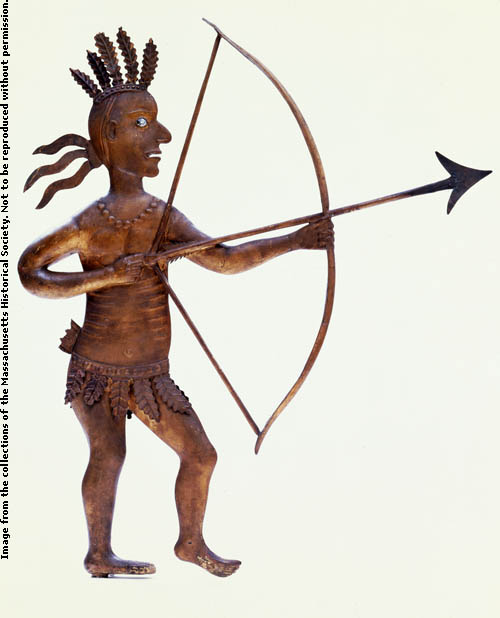
Early MA Governor's mansion. All that remains is the weathervane
Monday, January 3, 2011
Food at Taverns
From: http://www.foodtimeline.org/foodcolonial.html#tavernfare
These daily "Bills of Fare" were sometimes etched on a slate board. People were served together, and they could take as much as they wanted from communal bowls. Most folks ate very quickly; the food disappeared fast. There were no menus or individually priced items for selection.
Ham, bacon & fowl pigeon of one sort or another always to be had upon the road & often fresh meat or fish, dried Venison Indian or Wheaten bread, butter eggs milk, often cheese,
---
Allen purchased locally, and subsequently served to his customers, beef once, veal seven times, fowl and turkey five times, mutton twice, and lobsters, salmon, eels, oysters, duck, and other fish caughtin nearby Long Island Sound at least once. He kept stores of gammons (smoked ham or bacon), smoked and pickled tongue and beef, salt pork, crackers, butter, coffee, apples, and sugar on hand. Meat, heavily salted for preservation, was the mainstay of the 18th-century diet...In addition, Allen regulary served bread and a potpourri of vegetables: potatoes, carrots, peas, beans, beets, onions, cabbages, turnips, squashes, and cucumbers for pickling. He bought several types of English cheeses and imported lemons and limes for punch. In 1790 Allen ordered four tin plates "to Bake Gingerbread"...
----
check out city tavern cook book
http://www.amazon.com/City-Tavern-Cookbook-Birthplace-American/dp/0762434171
These daily "Bills of Fare" were sometimes etched on a slate board. People were served together, and they could take as much as they wanted from communal bowls. Most folks ate very quickly; the food disappeared fast. There were no menus or individually priced items for selection.
Ham, bacon & fowl pigeon of one sort or another always to be had upon the road & often fresh meat or fish, dried Venison Indian or Wheaten bread, butter eggs milk, often cheese,
---
Allen purchased locally, and subsequently served to his customers, beef once, veal seven times, fowl and turkey five times, mutton twice, and lobsters, salmon, eels, oysters, duck, and other fish caughtin nearby Long Island Sound at least once. He kept stores of gammons (smoked ham or bacon), smoked and pickled tongue and beef, salt pork, crackers, butter, coffee, apples, and sugar on hand. Meat, heavily salted for preservation, was the mainstay of the 18th-century diet...In addition, Allen regulary served bread and a potpourri of vegetables: potatoes, carrots, peas, beans, beets, onions, cabbages, turnips, squashes, and cucumbers for pickling. He bought several types of English cheeses and imported lemons and limes for punch. In 1790 Allen ordered four tin plates "to Bake Gingerbread"...
----
check out city tavern cook book
http://www.amazon.com/City-Tavern-Cookbook-Birthplace-American/dp/0762434171
Sunday, January 2, 2011
The Governor's Garden
from "The Old Coast Road," 1920
One can see a bit of the North Shore and Boston Harbor from here. This is the view that the Governor so admired, and tradition tells us that when he was forced to return to England he[Pg 24] walked on foot down the hill, shaking hands with his neighbors, patriot and Tory alike, with tears in his eyes as he left behind him the garden and the trees he had planted, and the house where he had so happily lived. Although the view from the front of the house is exquisite, the view from the back holds even more intimate attraction. Here is the old, old garden, and although the ephemeral blossoms of the present springtime shine brightly forth, the box, full twenty feet high, speaks of another epoch. Foxgloves lean against the "pleached alley," and roses clamber on a wall that doubtless bore the weight of their first progenitors.
http://www.gutenberg.org/files/21895/21895-h/21895-h.htm
One can see a bit of the North Shore and Boston Harbor from here. This is the view that the Governor so admired, and tradition tells us that when he was forced to return to England he[Pg 24] walked on foot down the hill, shaking hands with his neighbors, patriot and Tory alike, with tears in his eyes as he left behind him the garden and the trees he had planted, and the house where he had so happily lived. Although the view from the front of the house is exquisite, the view from the back holds even more intimate attraction. Here is the old, old garden, and although the ephemeral blossoms of the present springtime shine brightly forth, the box, full twenty feet high, speaks of another epoch. Foxgloves lean against the "pleached alley," and roses clamber on a wall that doubtless bore the weight of their first progenitors.
http://www.gutenberg.org/files/21895/21895-h/21895-h.htm
Indian Trail
THIS LINK GOES TO A GOOGLE MAP OF THE ORIGINAL PATH THE NEPONSET INDIANS TOOK DURING WINTER MIGRATION: View Larger Map
Subscribe to:
Posts (Atom)


